Start here
Key takeaways
- Acoustic string gauge, alloy, construction, scale length, and setup all affect response.
- A light .012–.053 set is a common factory reference, but the instrument maker’s recommendation takes priority.
- A heavier set can increase total pull and may require relief, action, and intonation checks.
- Do not increase string load to compensate for a damaged bridge, distorted top, or unresolved setup problem.
How to use this: Use the examples to compare options, then confirm product-specific details with the linked manufacturer references and your own instrument.
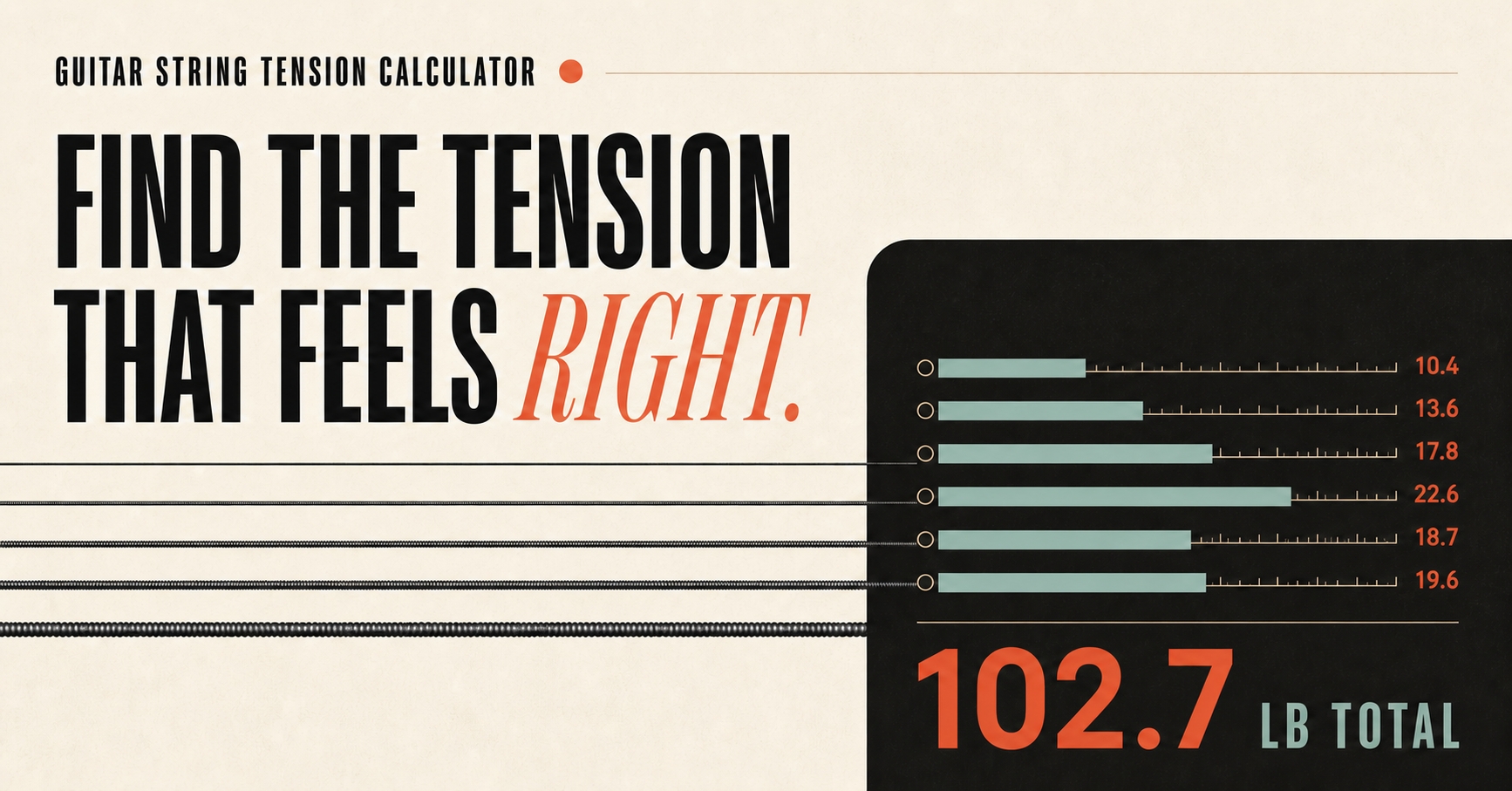
Acoustic steel-string sets commonly start around .011 or .012 and use phosphor-bronze or 80/20 bronze wraps. Their unit weights and total pull can differ from electric sets with similar outside gauges.
Why acoustics often use more tension
The acoustic top needs string energy to drive the bridge and soundboard. A firmer set trades some ease of play for more volume and dynamic headroom — moving from a light 12–53 set to a medium 13–56 set raises total pull by roughly 17%, about 26 pounds-force spread across six strings.
Guitar String Tension Calculator applies a modest material factor to its acoustic preset, but exact tension still depends on the manufacturer’s core and wrap design.
Respect the instrument
That kind of increase is easy to justify on paper and harder to justify on an old, lightly built, or already-stressed top. A guitar designed to carry medium strings will take it without complaint; one that has never worn anything heavier than light strings may not.
Watch neck relief, bridge lifting, top distortion, and action. Never use a calculator result as permission to exceed the instrument maker’s recommendation.
Compare before changing
Calculate the current set first. Then load the proposed gauges and compare total pull and each string’s profile. If the goal is a firmer bass response rather than a globally heavier feel, a custom set may change fewer variables — the gauge chart lists the common acoustic patterns worth trying first, and the main calculator’s acoustic mode turns any of them into a real comparison before you buy a set.
Match the set to the guitar and the playing job
Acoustic gauge affects the player, neck, bridge, and soundboard at the same time. Lighter sets can reduce fretting and bending effort; heavier sets may give a hard picker more headroom. The audible result depends on body design, scale length, setup, alloy, and technique, so a package description cannot guarantee more volume or a better tone.
Use the maker’s approved range as the boundary. Within it, compare one step at a time and keep alloy constant if gauge is the variable under test. A short-scale guitar can reach a familiar response with a different set than a long-scale guitar even when both are tuned to standard pitch.
| Player or instrument need | Reasonable first test | Watch for |
|---|---|---|
| Fingerstyle and wide fretting stretches | One lighter approved set | Reduced headroom under hard attack |
| Strong flatpicking with a healthy modern guitar | Current set versus one approved step heavier | Relief, action, and top movement |
| Only the bass side feels soft | A light/medium or custom bass change | Nut fit and tonal imbalance |
| Vintage, repaired, or lightly built guitar | Stay with maker or luthier guidance | Bridge lift, top distortion, rising action |
Inspect the guitar before increasing total pull
Look along the bridge for lifting, check whether the top has changed shape abruptly, and note action and neck relief before removing the old set. Existing damage should be evaluated rather than masked with a setup adjustment. A tension estimate cannot determine whether glue joints, braces, or an old neck reset are healthy.
After installing an approved set, tune in stages and let the guitar settle. Measure the same reference points again. Stop and seek qualified help if the bridge separates, the top changes unexpectedly, the neck adjustment reaches its limit, or playability deteriorates sharply.
Run a useful acoustic string comparison
Record the guitar in the same room with the microphone, pick, seating position, and passage unchanged. Capture a soft fingerstyle section, a firm strummed section, and single notes across the neck. Fresh-string brightness can dominate the first comparison, so repeat it after both sets have similar playing time.
Score fretting effort, attack, sustain, string noise, tuning stability, and the sound heard by the player separately. A set that sounds brighter at the microphone may feel less balanced under the fingers. Saving those observations alongside the tension profile turns the next purchase into a comparison instead of another guess.
Separate normal settling from signs that need attention
New acoustic strings commonly need repeated tuning as wraps seat at the post and contact points stabilize. A small temporary change in relief or action can also settle after the guitar reaches equilibrium. Record the starting measurements so the change can be judged rather than remembered vaguely.
A bridge gap that grows, a sudden top deformation, cracking sounds, or rapidly rising action is not ordinary string stretch. Detune safely and have the instrument inspected. The risk is higher when the guitar is old, recently repaired, lightly built, or being moved beyond the maker’s stated gauge range.
For an ordinary approved change, check the instrument after one hour, one day, and one week. Tune first, then measure relief and action from the same points. If the guitar stabilizes and remains healthy, use the playing notes from the A/B test to decide whether the tonal and tactile change is worth keeping.
- Normal: gradual tuning drift that decreases with stretching and playing.
- Investigate: a nut ping, binding, or one string that jumps in pitch.
- Stop and inspect: visible bridge separation or abrupt top movement.
- Record: final action, relief, tuning stability, and the exact installed set.
Reference material
Technical references
Use these references when you need the source equation, product-specific information, or a second explanation of the setup method.
- Acoustic String AlloysD'Addario
- Factory String Gauge ReferenceTaylor Guitars
- String Gauge, Setup, and HandfeelTaylor Guitars
- The Ultimate Guide to Acoustic Guitar StringsD'Addario
- How to Choose a String Gauge for Your Acoustic GuitarMartin Guitar
- How to Choose Acoustic Guitar StringsElixir Strings